Nasal Melatonin vs Oral Tablets: Why the Nose Has a Pharmacokinetic Edge
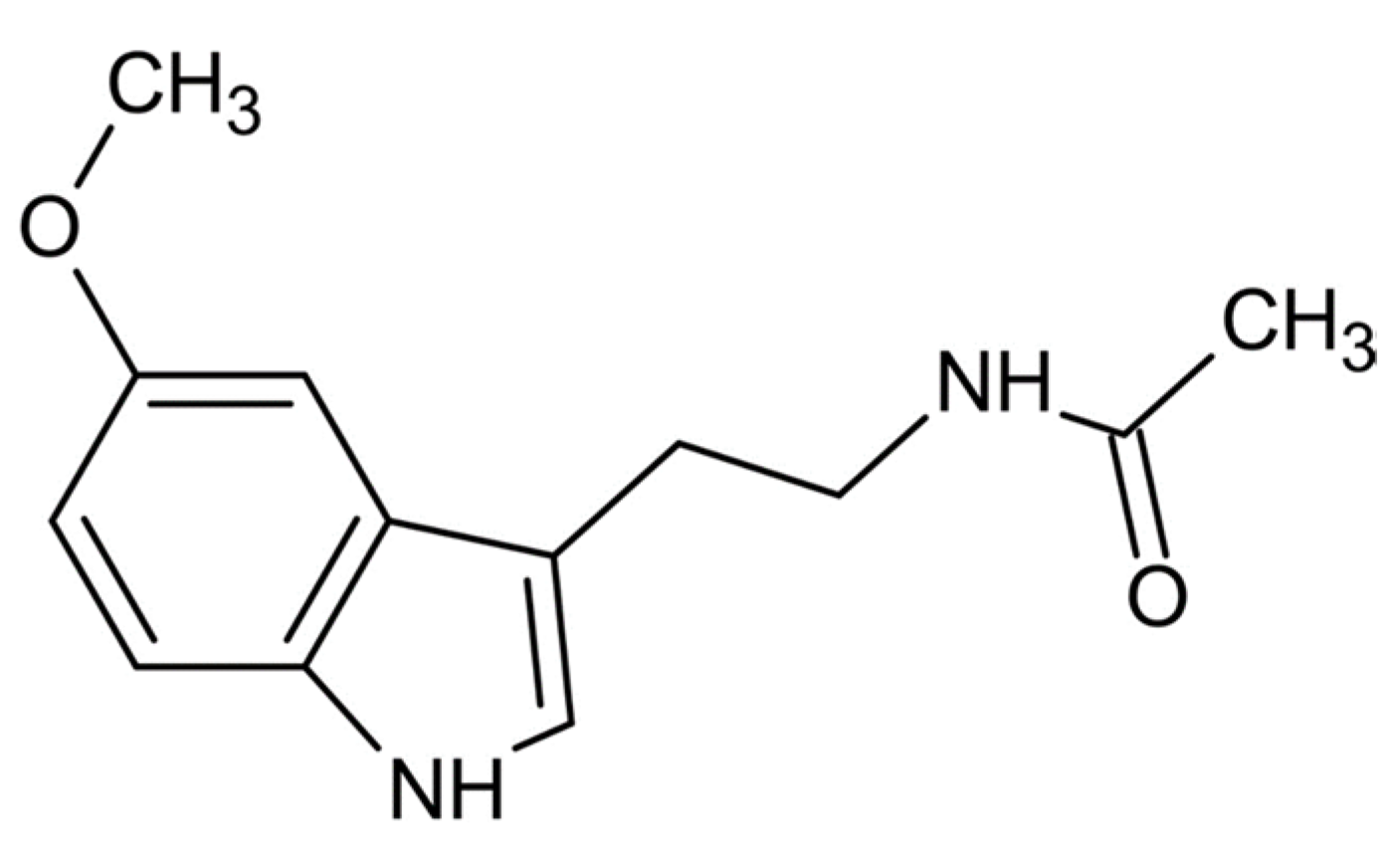
Background review: Melatonin and its role in sleep
Melatonin is not a conventional sedative. It is a timing signal that tells the brain night has begun.
That makes delivery unusually important. A signal that arrives late, weakly or unpredictably is not equivalent to one that reaches the bloodstream within minutes. Yet most melatonin products rely on a tablet, forcing the molecule through the stomach, intestines and liver before it can do anything.
Intranasal melatonin takes a much shorter route. The research is limited, but the studies we do have show a striking pattern: substantially faster absorption, high plasma concentrations and potentially comparable exposure from a fraction of the oral dose.
The earliest nasal study also revealed a major tolerability problem. Participants experienced painful nasal irritation. But the problem was probably not melatonin. It was the ethanol used to dissolve it.
Modern formulation chemistry offers a much better solution.
The problem with swallowing melatonin
After a melatonin tablet dissolves, the drug must cross the intestinal wall and pass through the liver before reaching systemic circulation. During this first pass, much of it is metabolized, primarily through CYP1A2.
In a randomized crossover study involving 12 healthy volunteers, oral doses of 2 mg and 4 mg produced an absolute bioavailability of only about 15%. In other words, roughly 85% of the administered dose never reached systemic circulation unchanged. The authors attributed this to incomplete absorption, extensive first-pass metabolism or both. A later systematic review placed oral bioavailability between 9% and 33%, with substantial variability between individuals. (DeMuro et al., 2000; Harpsøe et al., 2015)
Immediate-release tablets usually reach their maximum plasma concentration after approximately 40 to 60 minutes, although reported values vary considerably. Food, caffeine, smoking, age, oral contraceptives and differences in liver metabolism can all change the resulting concentration curve.
Taking a larger tablet can compensate for low average absorption, but it does not fix the underlying unpredictability.
What changes when melatonin is delivered through the nose?
The nasal cavity contains a thin, highly vascularized mucosal surface. A suitable drug can cross this tissue and enter systemic circulation rapidly, avoiding the gastrointestinal tract and much of the initial hepatic first-pass effect.
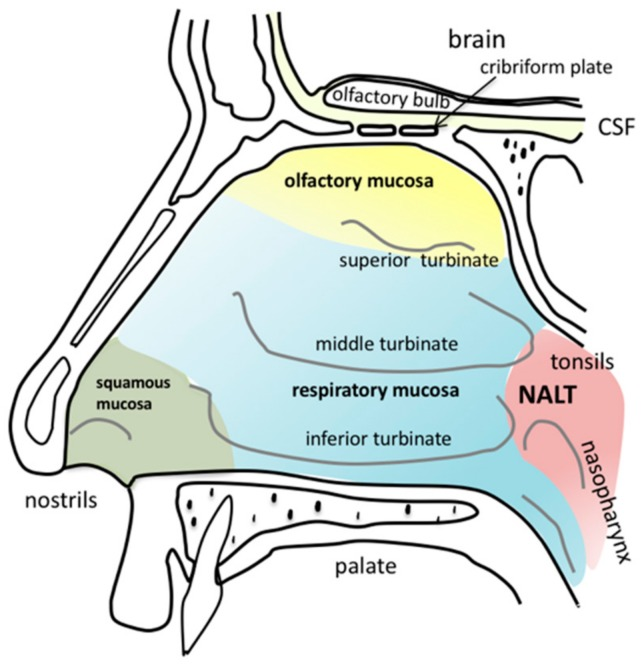
https://en.wikipedia.org/wiki/Olfactory_mucosa
That is exactly what small human studies have observed with melatonin.
In a 2002 randomized crossover study, eight healthy men received placebo and intranasal doses of either 200 or 400 micrograms. Both doses produced high plasma concentrations, and absorption was so fast that the researchers could not accurately fit an absorption rate to the data. The elimination half-lives were 44 and 60 minutes, respectively. Exposure increased proportionally between the two doses. (Helfrich et al., 2002)
A separate human study involving neurosurgical patients found that 400 micrograms of intranasal melatonin reached its peak plasma concentration in approximately five minutes. Importantly, the researchers found no evidence that melatonin was taking a special direct route from the nose into the brain. It appeared to enter the bloodstream rapidly and then cross the blood-brain barrier normally. The advantage was fast systemic delivery, not a magical “nose-to-brain” shortcut. (Merkus et al., 2003)
The most dramatic direct comparison appears in the development data for an aqueous cyclodextrin formulation. Eight healthy men received 200 micrograms intranasally, 400 micrograms intranasally and a 2.5 mg immediate-release tablet on separate occasions.
According to those data:
- Nasal melatonin peaked in under 10 minutes.
- The oral tablet peaked after approximately 90 minutes.
- The 200-microgram nasal dose produced roughly the same total exposure as the 2.5 mg tablet.
- Despite the much lower doses, 200 and 400 micrograms intranasally produced peak concentrations approximately five and eleven times higher than the tablet.
All treatments were reported as well tolerated. These particular comparisons were published in a patent rather than a full peer-reviewed clinical paper, so they should be treated as highly interesting development data, not definitive clinical proof. (US6007834A, Example 4)
The first sleep study was promising, but its formula was brutal
Intranasal melatonin was investigated as early as 1981.
In a small double-blind, placebo-controlled study of ten healthy adults, researchers administered a total nasal dose of 1.7 mg. Seventy percent of participants fell asleep after receiving melatonin. (Vollrath, Semm and Gammel, 1981)
That sounds impressive until the formulation is examined.
The spray contained a 0.85% solution of melatonin in ethanol. Crucially, 0.85% referred to the melatonin concentration. Ethanol was the solvent carrying it.
Melatonin has poor aqueous solubility, so the choice made sense chemically. Ethanol dissolved the drug, but it was a bad vehicle for sensitive nasal tissue. Later formulation documents described the administration as painful and seriously irritating. Even a subsequent formulation containing only 5% ethanol in water was described as producing unacceptable local effects.
The original study did not include the kind of controlled local-tolerability analysis that would allow ethanol to be proven as the sole cause. Still, the pattern strongly implicates the solvent:
- The active ingredient was delivered in ethanol.
- The formulation caused pain and serious local irritation.
- Lower-ethanol formulations continued to produce adverse local effects.
- Later alcohol-free aqueous formulations delivered melatonin without the same reported tolerability problem.
This was not evidence that nasal melatonin itself was inherently irritating. It was evidence that dissolving melatonin in alcohol and spraying it onto nasal mucosa was poor formulation design.
The better approach: solve solubility without ethanol
The core alcohol-free concept is straightforward: melatonin, hydroxypropyl-beta-cyclodextrin, water and a carefully controlled buffer system.
Hydroxypropyl-beta-cyclodextrin, usually abbreviated HPβCD, is a water-soluble molecule with a hydrophobic internal cavity. Melatonin can sit inside that cavity, forming an inclusion complex that allows it to remain dispersed in an aqueous formulation without relying on concentrated ethanol.
Laboratory research using human-derived airway epithelial cultures found that HPβCD increased melatonin’s aqueous solubility. At 1% HPβCD, melatonin permeation increased by approximately 115% compared with the formulation without cyclodextrin, while the tissue remained viable.
The same experiment also produced an important warning: more cyclodextrin was not automatically better. At higher concentrations, more melatonin remained tightly complexed inside the cyclodextrin, leaving less free drug available to cross the epithelium. At 10% HPβCD, melatonin was fully solubilized but its permeation rate decreased. (Babu et al., 2008)
That means HPβCD should be used at the lowest concentration that produces adequate solubility and stability. The correct amount must be established through phase-solubility testing, free-drug measurements and permeability testing, not guessed from the assumption that more solubilizer must work better.
What a modern nasal formulation should look like
A rational development target would contain:
- A low metered melatonin dose. A target of 0.25 mg in a calibrated 100-microlitre actuation corresponds to 2.5 mg/mL and sits between the 0.2 and 0.4 mg doses already examined in human pharmacokinetic research.
- HPβCD as the primary solubilizing system, with its concentration established experimentally.
- A pharmaceutical-grade aqueous vehicle adjusted toward isotonicity to reduce osmotic irritation.
- A low-capacity buffer that keeps the formulation inside a nasal-compatible, mildly acidic pH range. Human measurements place average nasal pH at approximately 6.3. (Washington et al., 2000)
- A preservative-free unit-dose or protected multidose delivery system where possible. If a conventional multidose pump is used, its resistance to microbial contamination must be demonstrated.
- A calibrated pump tested for delivered volume, dose uniformity, spray pattern and droplet distribution.
So, is nasal melatonin actually superior?
For rapid absorption and dose efficiency, nasal delivery has a clear pharmacokinetic advantage.
The available human evidence shows that intranasal melatonin can reach high plasma concentrations within minutes using doses measured in hundreds of micrograms rather than several milligrams. It avoids the slow and highly variable gastrointestinal route and produces a short, decisive melatonin pulse.
That profile is especially interesting when rapid sleep-onset signaling is the goal.
A 2025 scientific review found only three completed human trials of intranasal melatonin. The studies were small, and no large modern trial has yet compared a well-designed alcohol-free nasal spray with an oral tablet using objective sleep outcomes. (Ryan et al., 2025)
Intranasal delivery can produce a much faster and more dose-efficient melatonin pulse than oral tablets. The irritation associated with the earliest spray was most likely a failure of its ethanol-based formulation, not a failure of the nasal route.
With an alcohol-free HPβCD system, a nasal-compatible buffered vehicle and a properly validated metered pump, the same route could be made far more comfortable, precise and scientifically compelling.